November 4, 2026
Commercial construction projects operate under stringent timelines, strict safety mandates, and uncompromising structural standards. Whether building a high-rise office tower, an industrial logistics hub, or a suburban retail complex, getting materials where they are needed efficiently is paramount to success. Among the various stages of commercial development, concrete placement represents one of the most critical and labor-intensive processes. Traditional concrete placement methods, such as utilizing wheelbarrows, cranes, or direct chute discharge from ready-mix trucks, often introduce logistical bottlenecks, safety hazards, and unnecessary labor costs. Managing these logistical challenges efficiently ensures that construction schedules remain on track and budget overruns are avoided.
To overcome these site limitations and maintain rapid pour rates, modern general contractors increasingly rely on specialized concrete placement technology. Utilizing commercial concrete pumping services allows construction managers to transport liquid concrete directly from ready-mix trucks to the exact placement area, regardless of elevation, tight access points, or extensive horizontal distances. Beyond speed, concrete offers remarkable thermal and structural durability. According to Home Grail, concrete reaches its melting point at approximately 1,550 degrees Celsius. This incredible fire resistance makes it the preferred material for heavy commercial frameworks, and leveraging commercial concrete pumping services ensures that these high-performance mixes are placed smoothly, quickly, and uniformly across complex job sites.
1. High-Rise Office Towers and High-Density Residential Buildings
Constructing multi-story commercial buildings presents unique material handling challenges, primarily centered around vertical elevation. Transporting thousands of yards of heavy wet concrete to upper floors using tower cranes and buckets is exceptionally slow, inefficient, and creates severe congestion on upper decks.
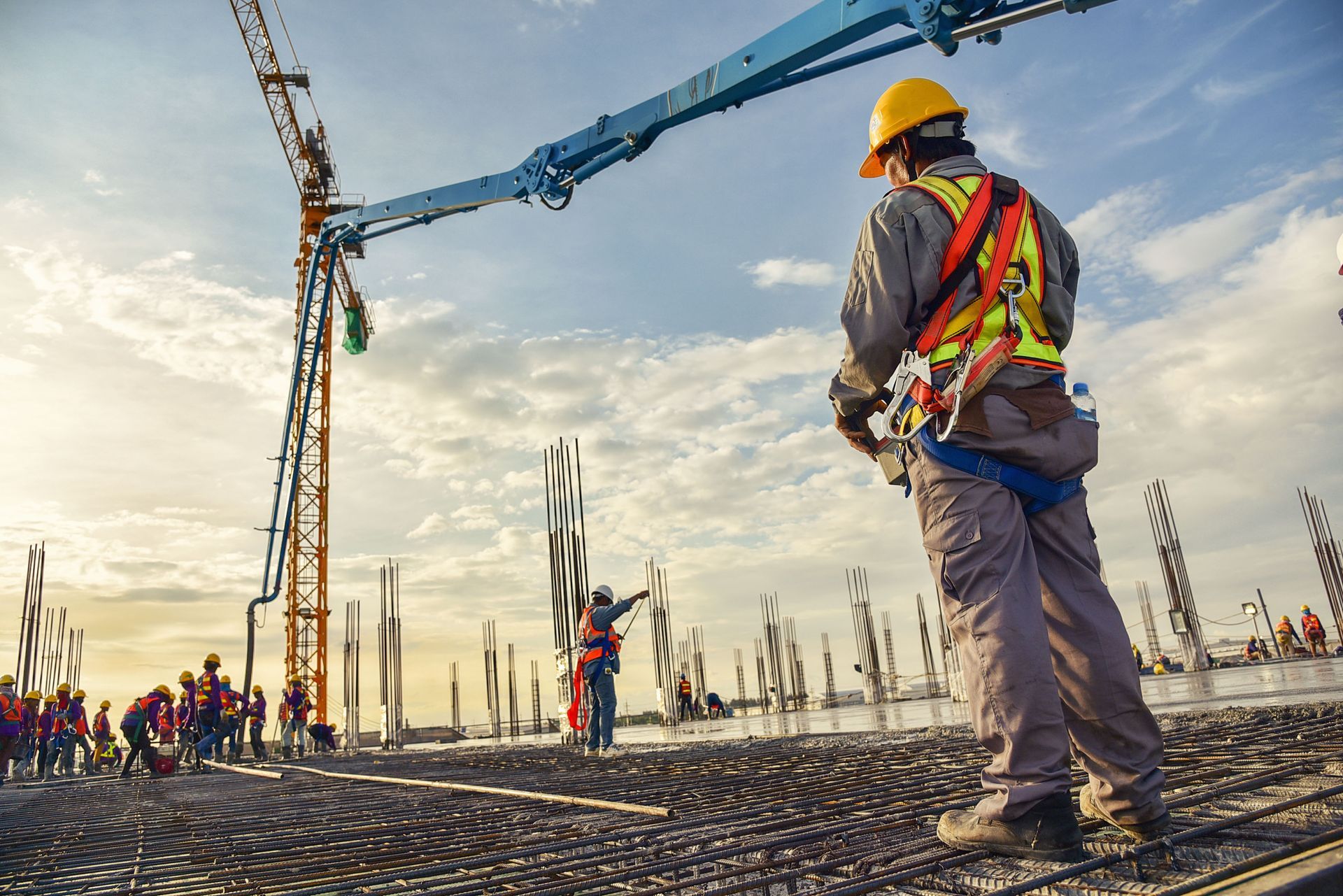
High-rise developments rely heavily on high-pressure boom pumps and stationary line pumps to convey concrete vertically across dozens of stories without interruption. By establishing a dedicated vertical pipeline system, contractors achieve continuous pour rates that keep pace with fast-moving rebar placement and formwork assembly. Integrating commercial concrete pumping services into high-rise schedules dramatically accelerates floor-by-floor cycle times, minimizes crane utilization for non-concrete tasks, and ensures consistent material density across elevated slabs and structural columns. Maintaining steady placement velocity also eliminates structural weak points between successive pours on high decks.
2. Large-Scale Industrial Warehouses and Logistics Hubs
Modern distribution centers, fulfillment facilities, and manufacturing plants feature massive horizontal footprints requiring thousands of square feet of continuous concrete slab placement. These projects demand specialized slab mixes, tight flatness tolerances, and rapid turnaround times to accommodate heavy forklift traffic and high-bay storage racks.
Directly driving heavy ready-mix trucks onto prepared subgrades or rebar mats to pour concrete can disrupt grade preparation, damage vapor barriers, and crush reinforcement steel. By employing commercial concrete pumping services equipped with long-reach boom pumps or extended line systems, operators can park mix trucks safely on stable perimeters while pumping concrete over prepared ground. This setup preserves subbase integrity, enables continuous large-volume pours, and allows finishing crews to achieve flat, high-durability industrial floors. Utilizing dedicated boom trucks ensures that vast floor plans can be completed in significantly fewer pour phases.
3. Commercial Parking Structures and Multilevel Garages
Parking garages demand rigorous structural engineering due to the heavy dynamic loads, vehicle vibration, and environmental exposure they endure throughout their lifespans. Cast-in-place post-tensioned decks, heavy transfer girders, and dense concrete columns require precise, void-free placement around intricate rebar networks.
Navigating tight drive aisles, low overhead clearances, and multi-tier deck layouts makes traditional pour methods nearly impossible for parking garage construction. Boom pumps positioned on the exterior perimeter can extend articulated booms over top decks or through interior openings to deliver concrete directly into forms. Utilizing commercial concrete pumping services for parking structure pours eliminates cold joints, prevents structural honeycomb defects around dense rebar, and ensures uniform structural strength across every level.
4. Medical Centers, Hospitals, and Healthcare Facilities
Healthcare facility construction involves complex architectural designs, strict environmental regulations, and often requires building within active hospital campuses or congested urban medical districts. Noise restrictions, limited laydown space, and heavy site traffic mean material deliveries must be executed with surgical precision.
Concrete pumps provide an ideal solution for restricted healthcare job sites by drastically reducing the equipment footprint needed during major structural pours. Pumping lines can be routed through narrow access corridors, around existing medical wings, or directly into subterranean foundation vaults without disrupting surrounding campus operations. Professional commercial concrete pumping services enable contractors to execute continuous foundation and structural pours quietly and efficiently, minimizing site disruption while meeting stringent hospital construction deadlines. Advanced staging strategies keep surrounding emergency access routes open and completely clear of heavy equipment clutter.
5. Retail Power Centers, Strip Malls, and Dining Complexes
Commercial retail developments often feature sprawling, single-story layouts with varied elevation steps, decorative architectural walls, and embedded utility trenches. Because these sites feature extensive plumbing, electrical conduit, and HVAC rough-ins buried beneath sub-slabs, vehicle access across the interior pad is strictly prohibited during the pour.
Line pumping systems excel in retail environments by allowing operators to run flexible, lightweight hoses across complex sub-floor utility installations without causing disturbance. Contractors can easily move pump lines from section to section, filling footings, interior pads, curbs, and sidewalk aprons from a single setup location. Incorporating commercial concrete pumping services into retail site builds keeps utility infrastructure protected and speeds up the transition from slab placement to structural steel framing.
6. Transportation Hubs, Bridges, and Civil Infrastructure
Infrastructure projects such as airport terminals, train stations, highway overpasses, and bridge abutments involve massive concrete placements in challenging topographic environments. These job sites frequently span active waterways, busy expressways, or steep embankments where ready-mix trucks simply cannot navigate.
Long-reach boom pumps—some capable of extending over 200 feet horizontally or vertically—provide the reach required to span physical obstacles and place concrete exactly where needed. Whether pouring heavy bridge piers over water or placing thick foundation pads inside sub-surface transit tunnels, specialized pumping equipment ensures uninterrupted material flow. Contracting commercial concrete pumping services for civil infrastructure guarantees that high-strength structural mixes are placed before initial set times occur, securing maximum structural performance under extreme operational loads.
7. Subterranean Basements and Deep Foundation Systems
Deep foundations, including high-capacity mat footings, retaining walls, and multi-level underground parking vaults, require placing massive volumes of concrete far below surface grade. Gravity chutes are often inadequate for deep excavations, as unguided drops can cause aggregate segregation, weakening the finished structure.
Concrete pumping equipment solves subterranean placement issues by utilizing rigid pipelines and flexible drop hoses to control material velocity all the way down into deep excavations. Controlled pumping prevents aggregate separation, ensuring a homogenous mix from top to bottom. Utilizing commercial concrete pumping services for deep foundation systems allows general contractors to fill continuous slurry walls, thick raft foundations, and underground structural piers safely, efficiently, and with total precision. Precise flow control eliminates air pockets and guarantees maximum concrete density throughout deep structural walls.
From towering urban skyscrapers and sprawling industrial distribution hubs to complex civil infrastructure and subterranean foundations, modern commercial construction relies on speed, precision, and structural integrity. Attempting to place concrete using outdated manual methods introduces safety risks, increases site congestion, and inflates overall labor costs. Leveraging dedicated pumping equipment streamlines material logistics, protects delicate subgrade preparations, and guarantees high-quality, uniform structural results regardless of job site constraints. Contact Hillcrest Concrete Pumping LLC today to schedule your next structural pour and experience the ultimate in reliable, professional concrete placement!